Antique stoneware jugs and crocks abound, but old, primitive salt-glazed stoneware pitchers are hard to find. This extra-large one stands 9 1/2 inches tall, 5 inches across the mouth and 10 inches across from the handle to the edge of the shoulder. It weighs in at a sturdy 5 1/2 pounds. The pitcher is accompanied by a handwritten note that states:
FOUND IN THE OLD MILB... GROCERY STORE IN 1940 IN WHAT CHEER, IA.
FROM THE NELSON POTTERY.
(Signed) W.C. IR... (Irwin, Irving, Irons?)
The note came as photographed, belatedly protected in the past by a plastic sleeve after the tears in the paper occurred.
E.G. Nelson and his sons founded the What Cheer Clay Products Company in 1912 in the town of the same name, but most folks just called it the Nelson Pottery. They made stoneware vessels, including pots, pitchers, jugs, churns, preserve jars, and similar utilitarian wares, as well as sewer tile and bricks. The kilns closed in 1962.
Although this is a very basic, utilitarian piece, the potter nevertheless added some details to please the eye. The wide. standing lip; the pretty pulled spout; the shapely body and incised grooves above the shoulder and above the base display his efforts. Even the applied handle was given a modeled shape at the bottom of it. You can see and feel the finger ridges on the inside from the turning on the wheel. The coal-fired beehive kiln created the drips on the tan clay which was salt-glazed and lined with Albany slip. **
Sometime in the past, a piece flaked off the inner edge of the rim down into the Albany slip inside and was reattached. It is not at all visible when the handle is turned to the left, since it does not show on the outside. This make-do repair demonstrates how valued useful objects were, especially in small towns far from a city (Ottumwa was the nearest "big city," with a population in 1912 of about 22,000 and located about 35 miles away, a long trip by horse-drawn wagon).
This large hand-thrown stoneware pitcher is a great find, one with such honest simplicity it displays so well in both country and modern interiors.
✪✪ Albany slip became a popular glaze in the 1880s. Dark brown clay was mixed with water to the consistency of fresh cream and then applied. Albany slip was often used on the inside of stoneware (as it was on this pitcher) because the surface was easier to keep clean.
© PrimpingYourHome.com
PYH 5215
Antique stoneware jugs and crocks abound, but old, primitive salt-glazed stoneware pitchers are hard to find. This extra-large one stands 9 1/2 inches tall, 5 inches across the mouth and 10 inches across from the handle to the edge of the shoulder. It weighs in at a sturdy 5 1/2 pounds. The pitcher is accompanied by a handwritten note that states:
FOUND IN THE OLD MILB... GROCERY STORE IN 1940 IN WHAT CHEER, IA.
FROM THE NELSON POTTERY.
(Signed) W.C. IR... (Irwin, Irving, Irons?)
The note came as photographed, belatedly protected in the past by a plastic sleeve after the tears in the paper occurred.
E.G. Nelson and his sons founded the What Cheer Clay Products Company in 1912 in the town of the same name, but most folks just called it the Nelson Pottery. They made stoneware vessels, including pots, pitchers, jugs, churns, preserve jars, and similar utilitarian wares, as well as sewer tile and bricks. The kilns closed in 1962.
Although this is a very basic, utilitarian piece, the potter nevertheless added some details to please the eye. The wide. standing lip; the pretty pulled spout; the shapely body and incised grooves above the shoulder and above the base display his efforts. Even the applied handle was given a modeled shape at the bottom of it. You can see and feel the finger ridges on the inside from the turning on the wheel. The coal-fired beehive kiln created the drips on the tan clay which was salt-glazed and lined with Albany slip. **
Sometime in the past, a piece flaked off the inner edge of the rim down into the Albany slip inside and was reattached. It is not at all visible when the handle is turned to the left, since it does not show on the outside. This make-do repair demonstrates how valued useful objects were, especially in small towns far from a city (Ottumwa was the nearest "big city," with a population in 1912 of about 22,000 and located about 35 miles away, a long trip by horse-drawn wagon).
This large hand-thrown stoneware pitcher is a great find, one with such honest simplicity it displays so well in both country and modern interiors.
✪✪ Albany slip became a popular glaze in the 1880s. Dark brown clay was mixed with water to the consistency of fresh cream and then applied. Albany slip was often used on the inside of stoneware (as it was on this pitcher) because the surface was easier to keep clean.
© PrimpingYourHome.com
PYH 5215
 Image 1 of 15
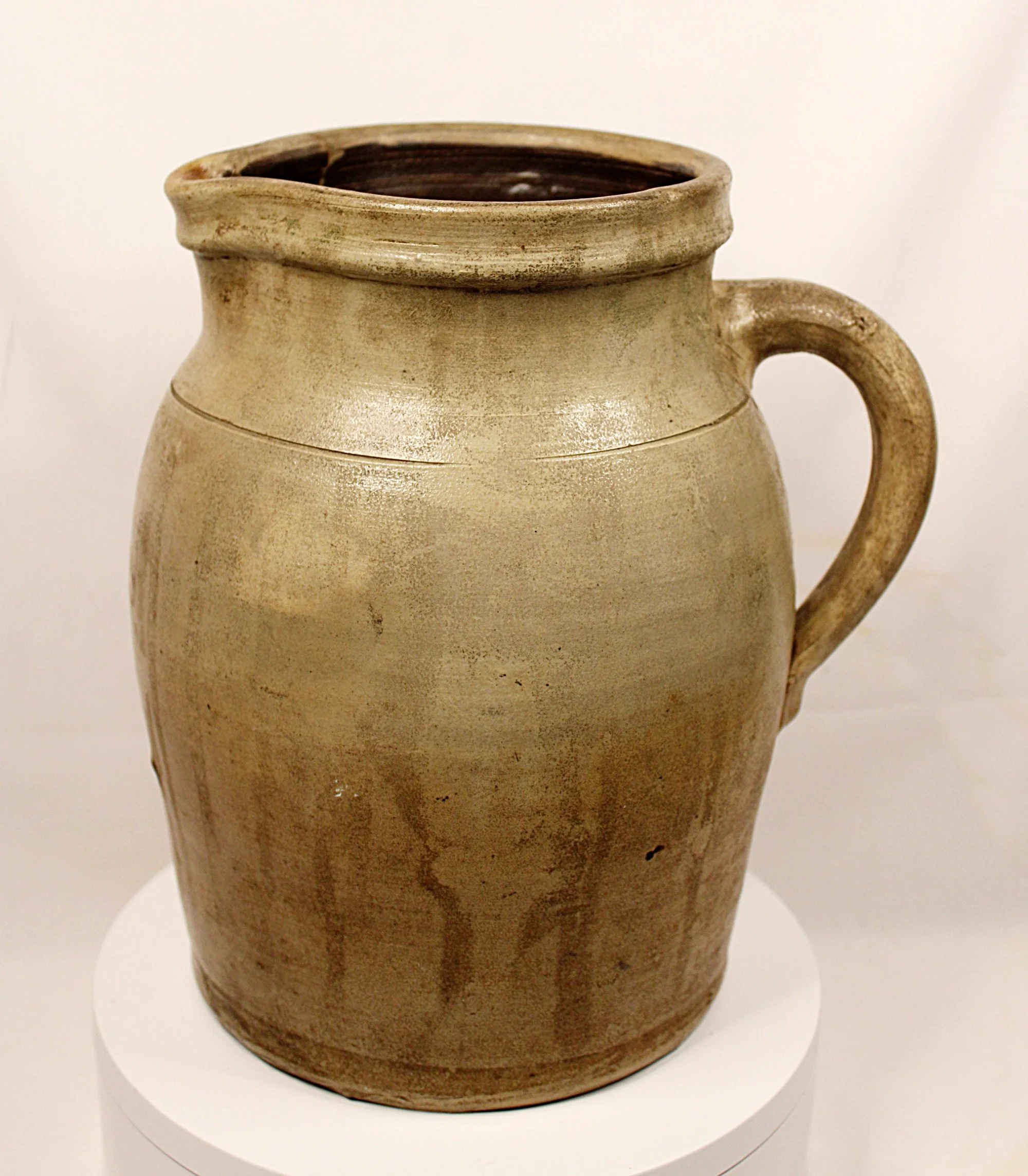 Image 2 of 15
 Image 3 of 15
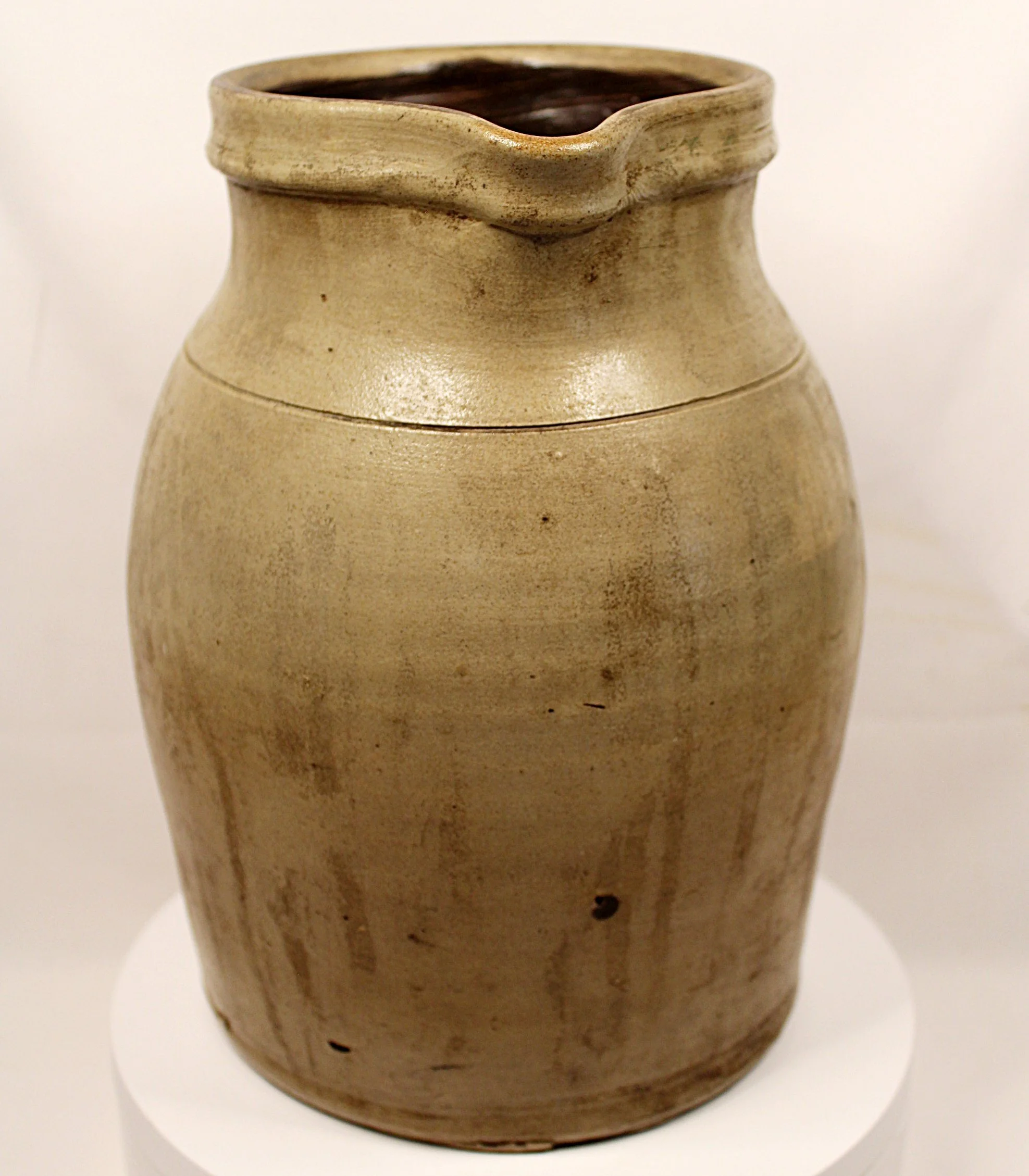 Image 4 of 15
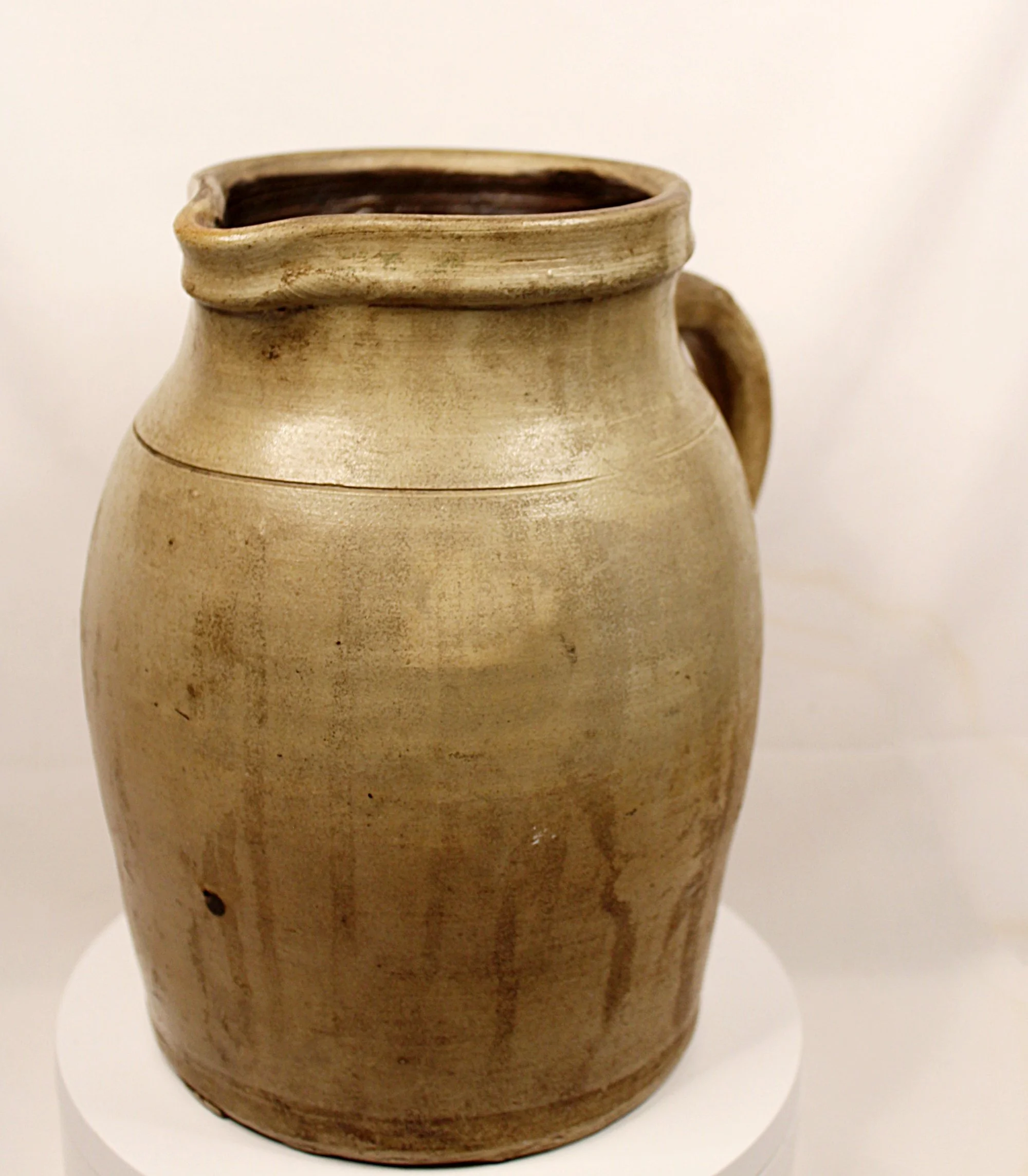 Image 5 of 15
 Image 6 of 15
 Image 7 of 15
 Image 8 of 15
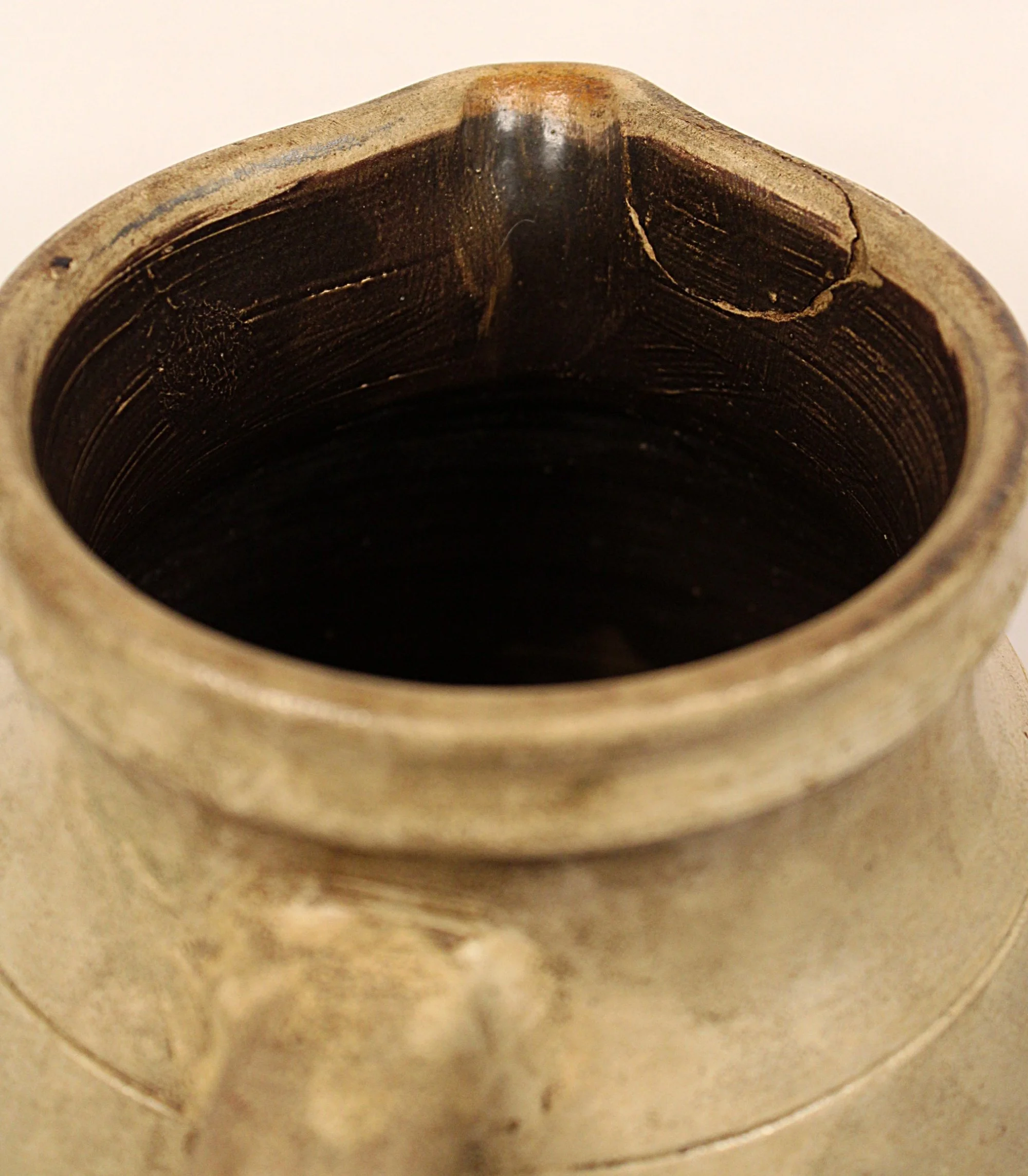 Image 9 of 15
 Image 10 of 15
 Image 11 of 15
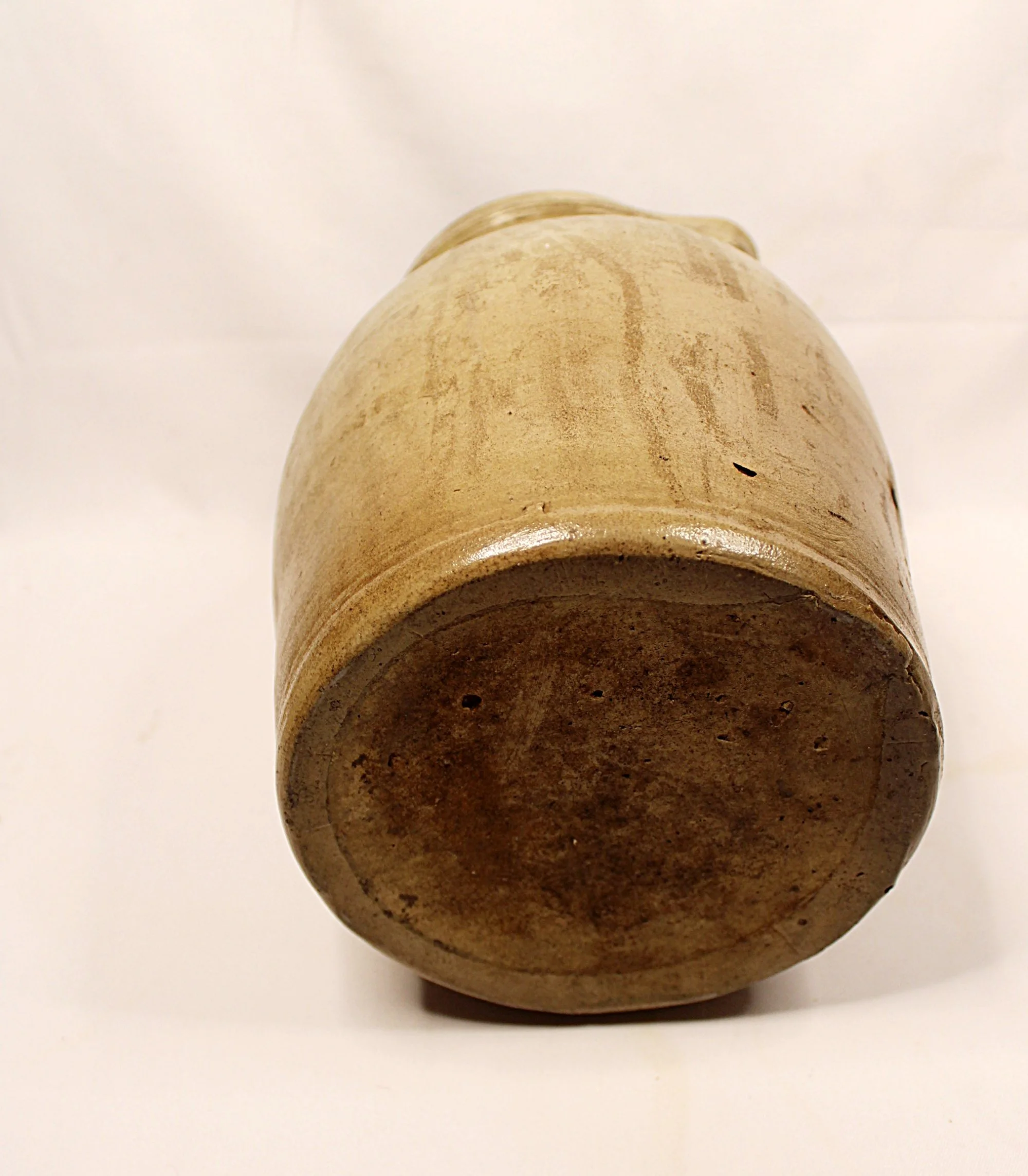 Image 12 of 15
 Image 13 of 15
 Image 14 of 15
 Image 15 of 15