This rare hand-carved African fiber comb was used for stripping coarse fibers from palm leaves and raffia for weaving. While often misidentified as a wool comb for separating strands of wool, the hand-forged iron spikes are not made for combing fine fibers but for shredding and tearing. The Royal Museum for Central Africa has these fiber-processing combs in their collection, which are described as rare because they were everyday working objects, not ceremonial pieces, so fewer survived.
The tapered hardwood handle has cross-hatched geometric patterns, burned and incised lines and segmented bands, all characteristic of Central African tools from the Congo Basin (Democratic Republic of Congo / Republic of Congo) and possibly from Gabon or Cameroon. Utilitarian tools like this one are not always tribe-specific, as similar designs were shared across neighboring cultures.
The eleven very sharp iron spikes (or teeth) with their uneven shaping and hammer marks were driven through a piece of hollowed cow bone that's secured to the wood handle with various sizes of hand-cut iron nails. The nails are riveted--beaten down--onto the other side to form irregular knobs. This construction is also characteristic of the Congo Basin and Cameroon / Gabon regions. It's rare for the mount to survive intact in this condition.
This African textile-working tool dates from the early to mid-twentieth century. It measures 12 inches in length, about 3/4 of an inch thick, 4 inches across the cow bone mount and weighs 10 ounces. The spikes stand 4 1/2 inches tall. Although heavily used (we cleaned off the dirt), it's in excellent condition with a handsome patina and no missing spikes, nails or pieces of wood. For collectors of African material cultural artifacts, this is a museum-worthy collector piece with strong visual appeal.
© PrimpingYourHome.com
PYH 5814
This rare hand-carved African fiber comb was used for stripping coarse fibers from palm leaves and raffia for weaving. While often misidentified as a wool comb for separating strands of wool, the hand-forged iron spikes are not made for combing fine fibers but for shredding and tearing. The Royal Museum for Central Africa has these fiber-processing combs in their collection, which are described as rare because they were everyday working objects, not ceremonial pieces, so fewer survived.
The tapered hardwood handle has cross-hatched geometric patterns, burned and incised lines and segmented bands, all characteristic of Central African tools from the Congo Basin (Democratic Republic of Congo / Republic of Congo) and possibly from Gabon or Cameroon. Utilitarian tools like this one are not always tribe-specific, as similar designs were shared across neighboring cultures.
The eleven very sharp iron spikes (or teeth) with their uneven shaping and hammer marks were driven through a piece of hollowed cow bone that's secured to the wood handle with various sizes of hand-cut iron nails. The nails are riveted--beaten down--onto the other side to form irregular knobs. This construction is also characteristic of the Congo Basin and Cameroon / Gabon regions. It's rare for the mount to survive intact in this condition.
This African textile-working tool dates from the early to mid-twentieth century. It measures 12 inches in length, about 3/4 of an inch thick, 4 inches across the cow bone mount and weighs 10 ounces. The spikes stand 4 1/2 inches tall. Although heavily used (we cleaned off the dirt), it's in excellent condition with a handsome patina and no missing spikes, nails or pieces of wood. For collectors of African material cultural artifacts, this is a museum-worthy collector piece with strong visual appeal.
© PrimpingYourHome.com
PYH 5814
 Image 1 of 17
 Image 2 of 17
 Image 3 of 17
 Image 4 of 17
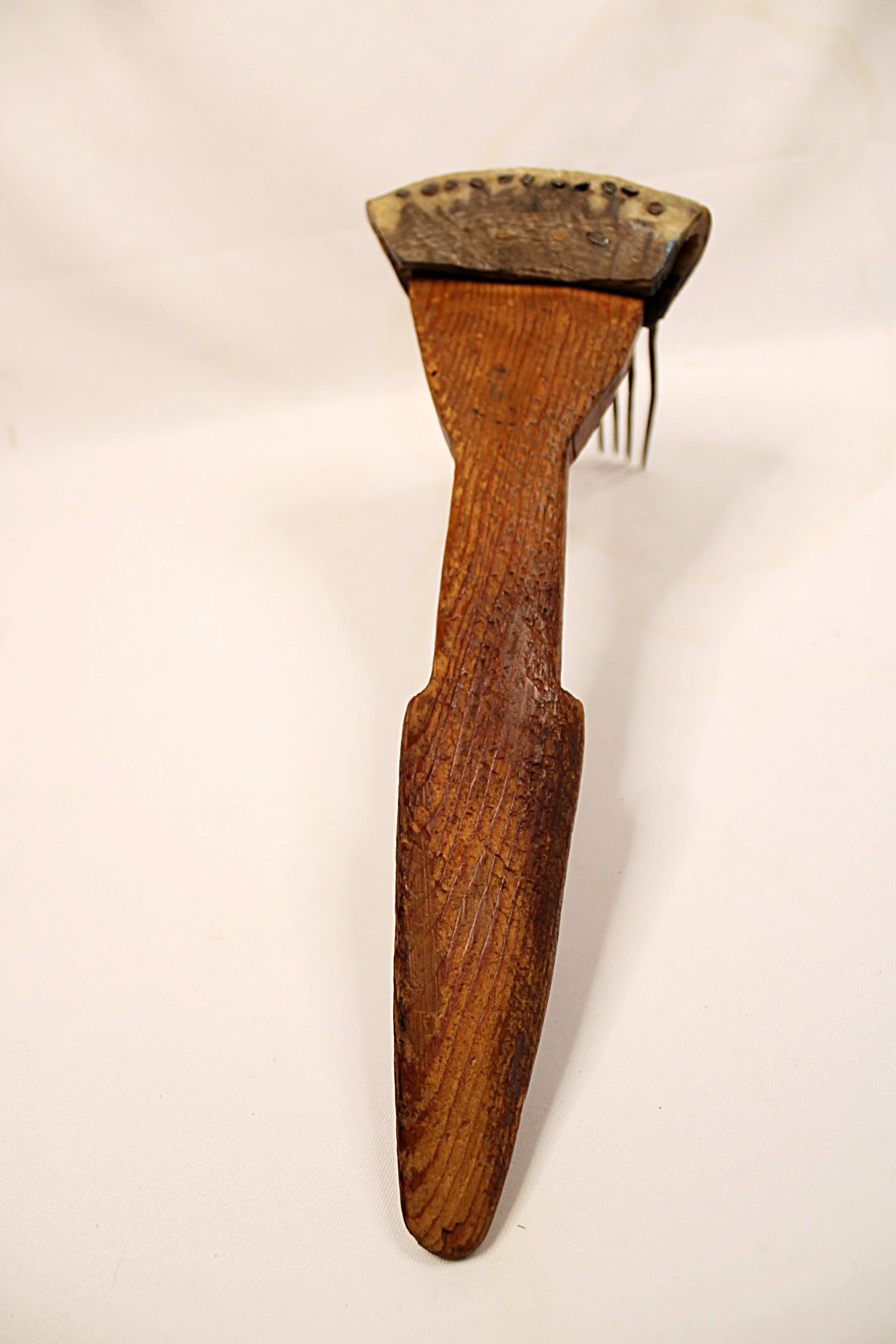 Image 5 of 17
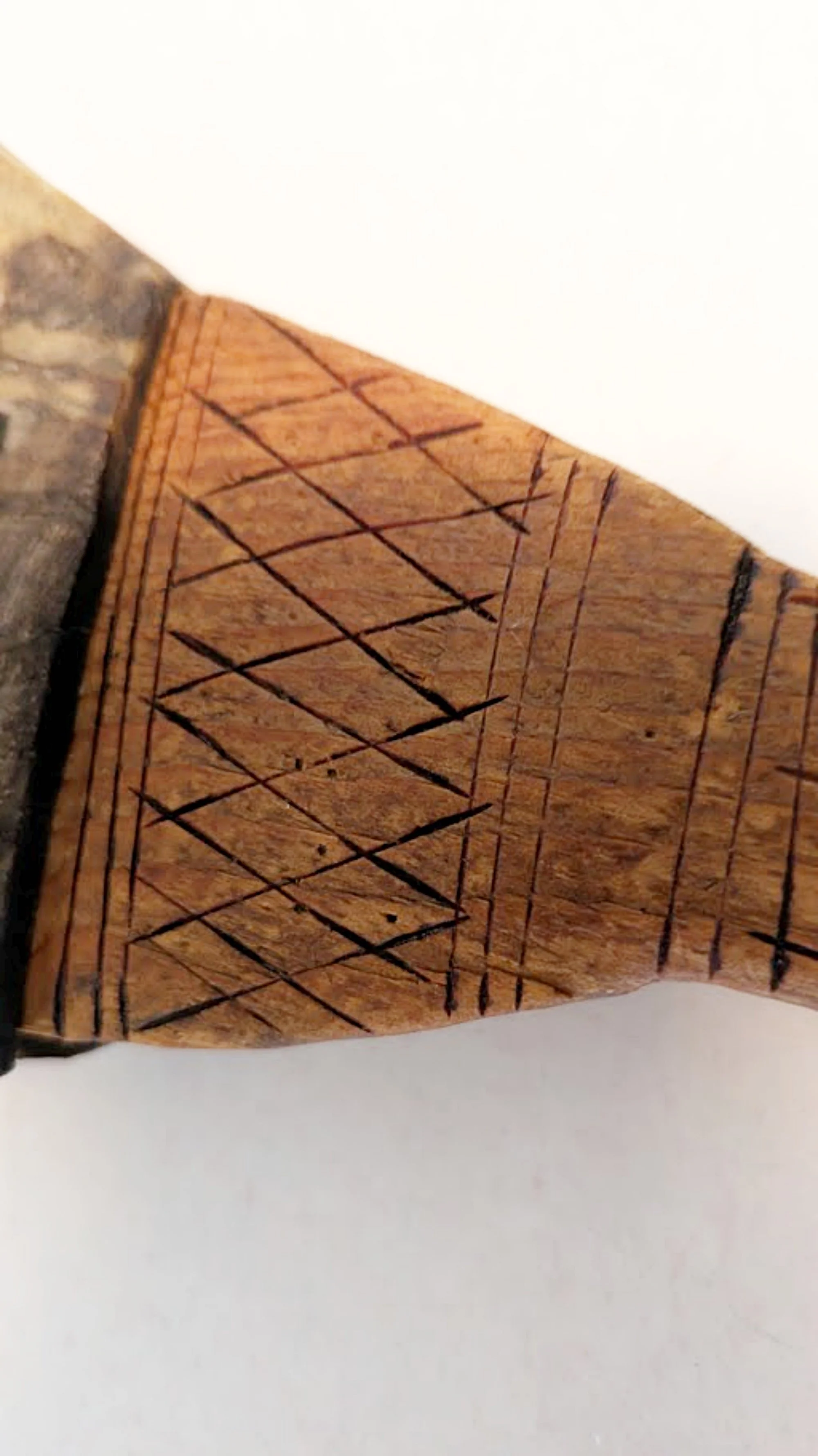 Image 6 of 17
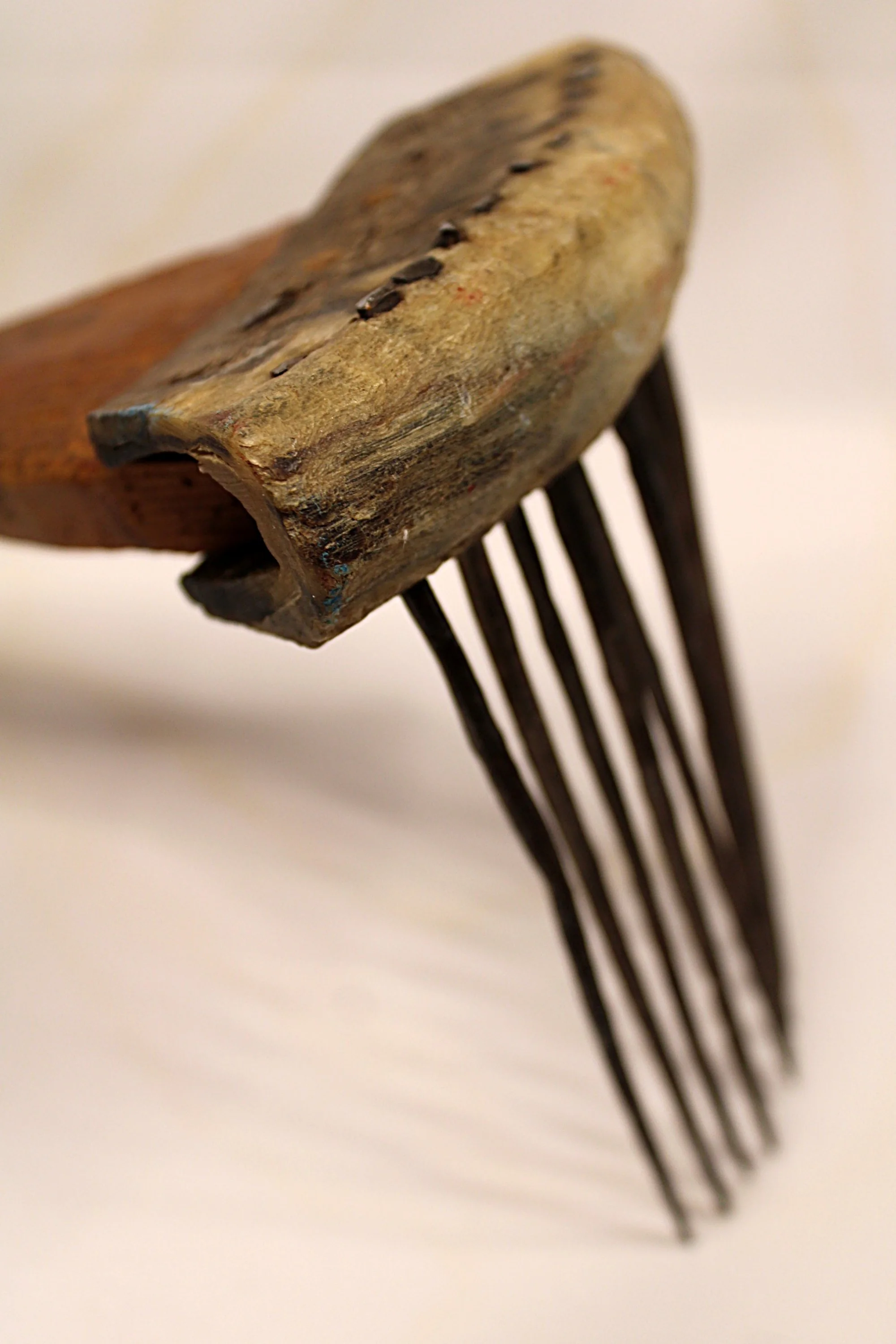 Image 7 of 17
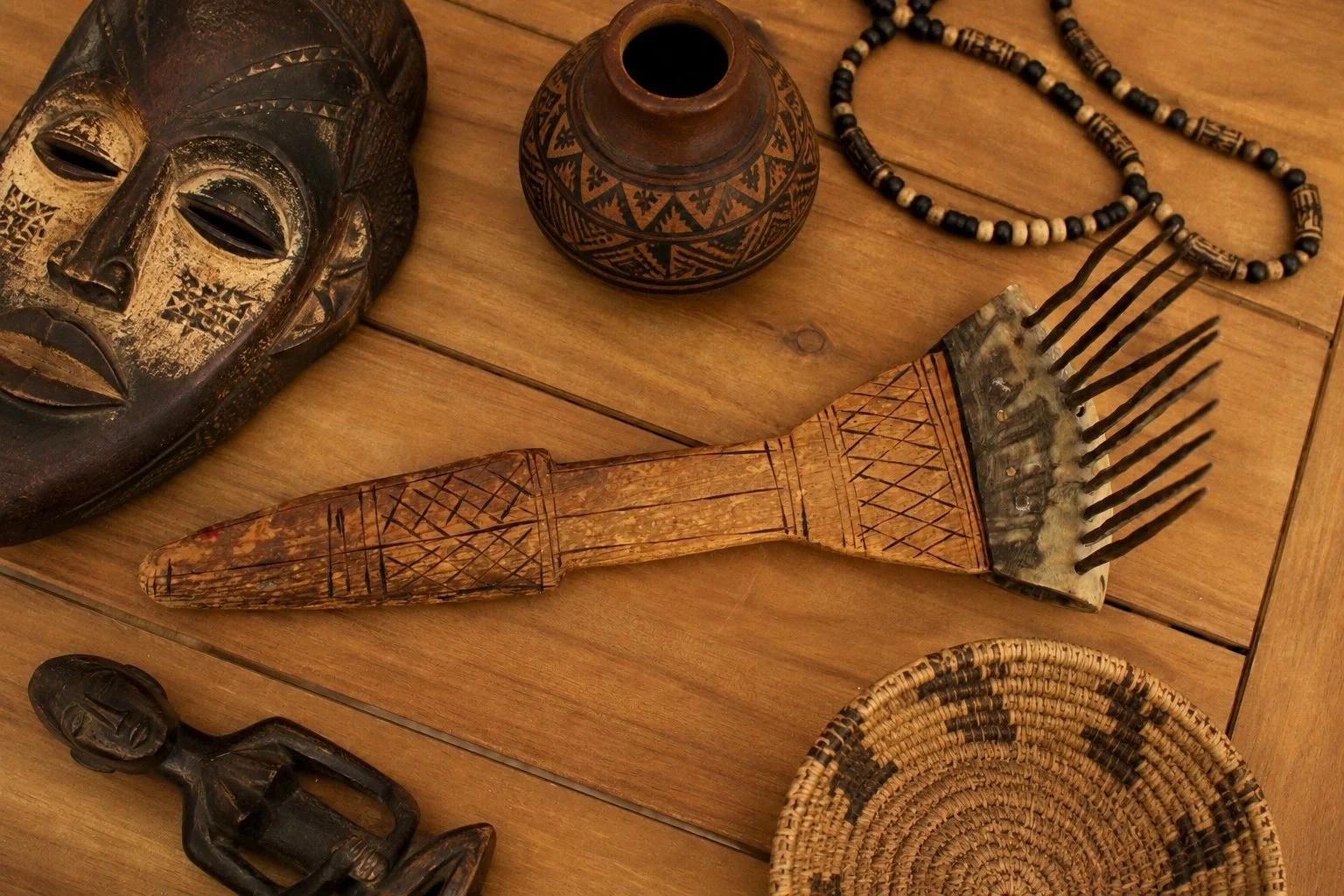 Image 8 of 17
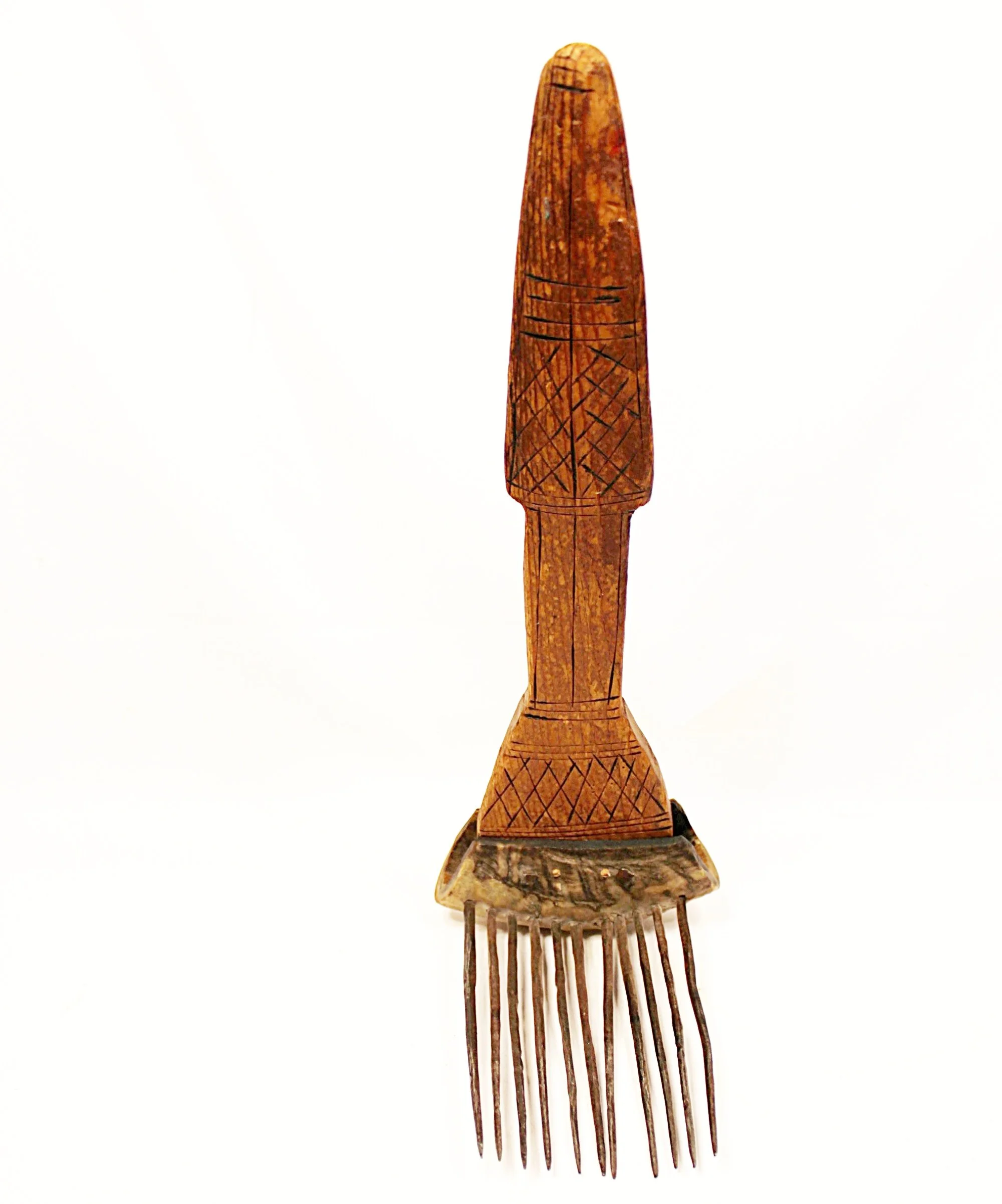 Image 9 of 17
 Image 10 of 17
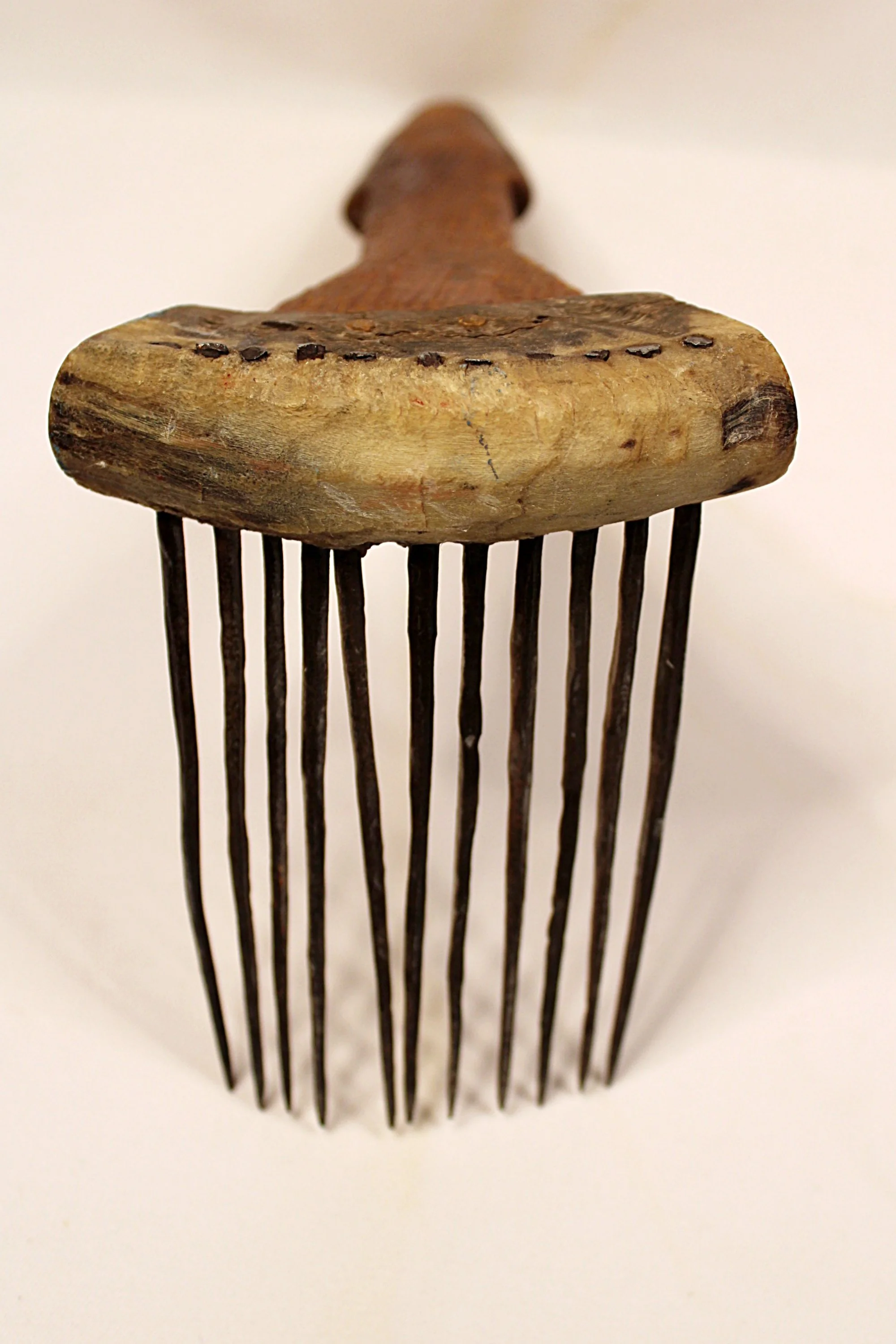 Image 11 of 17
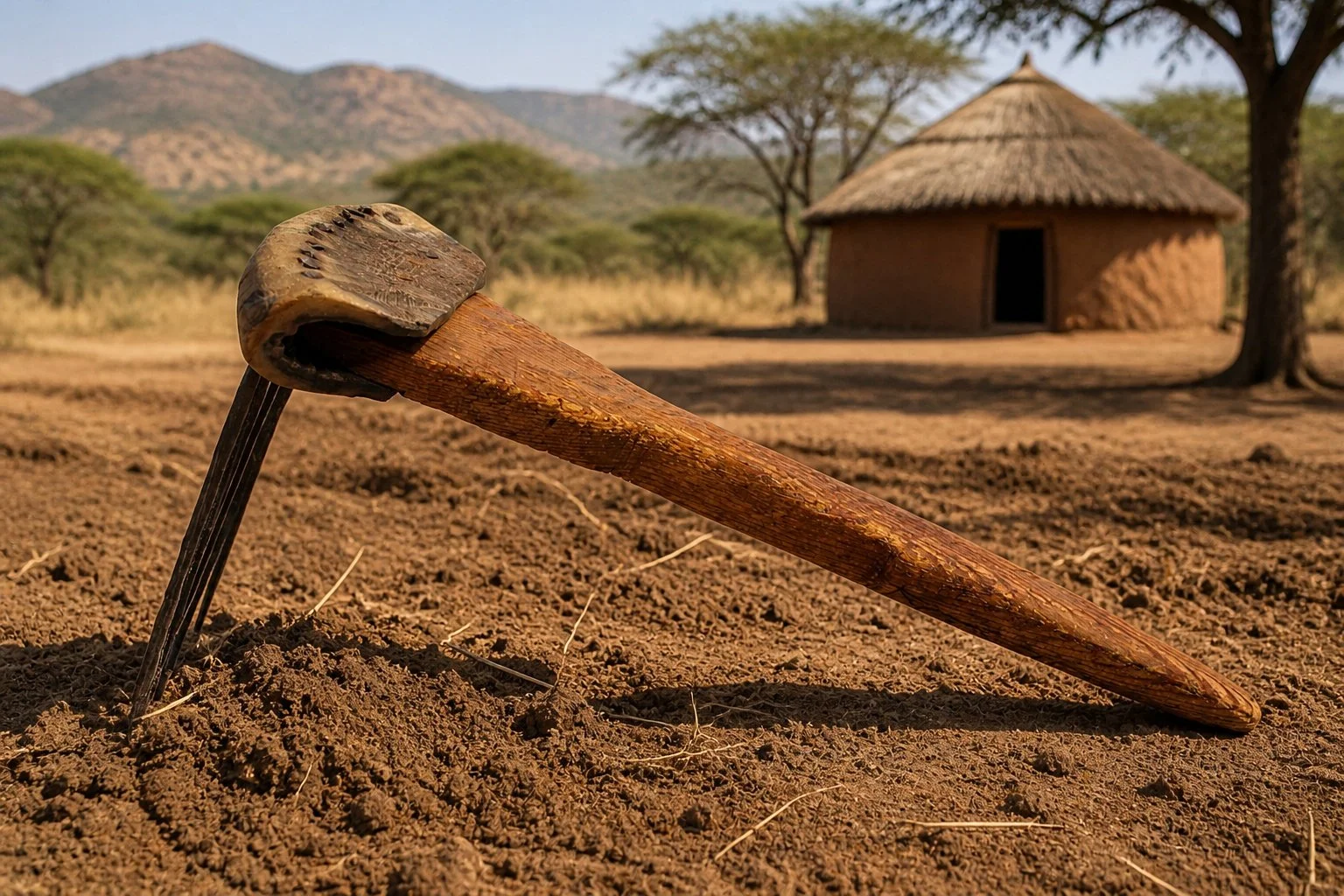 Image 12 of 17
 Image 13 of 17
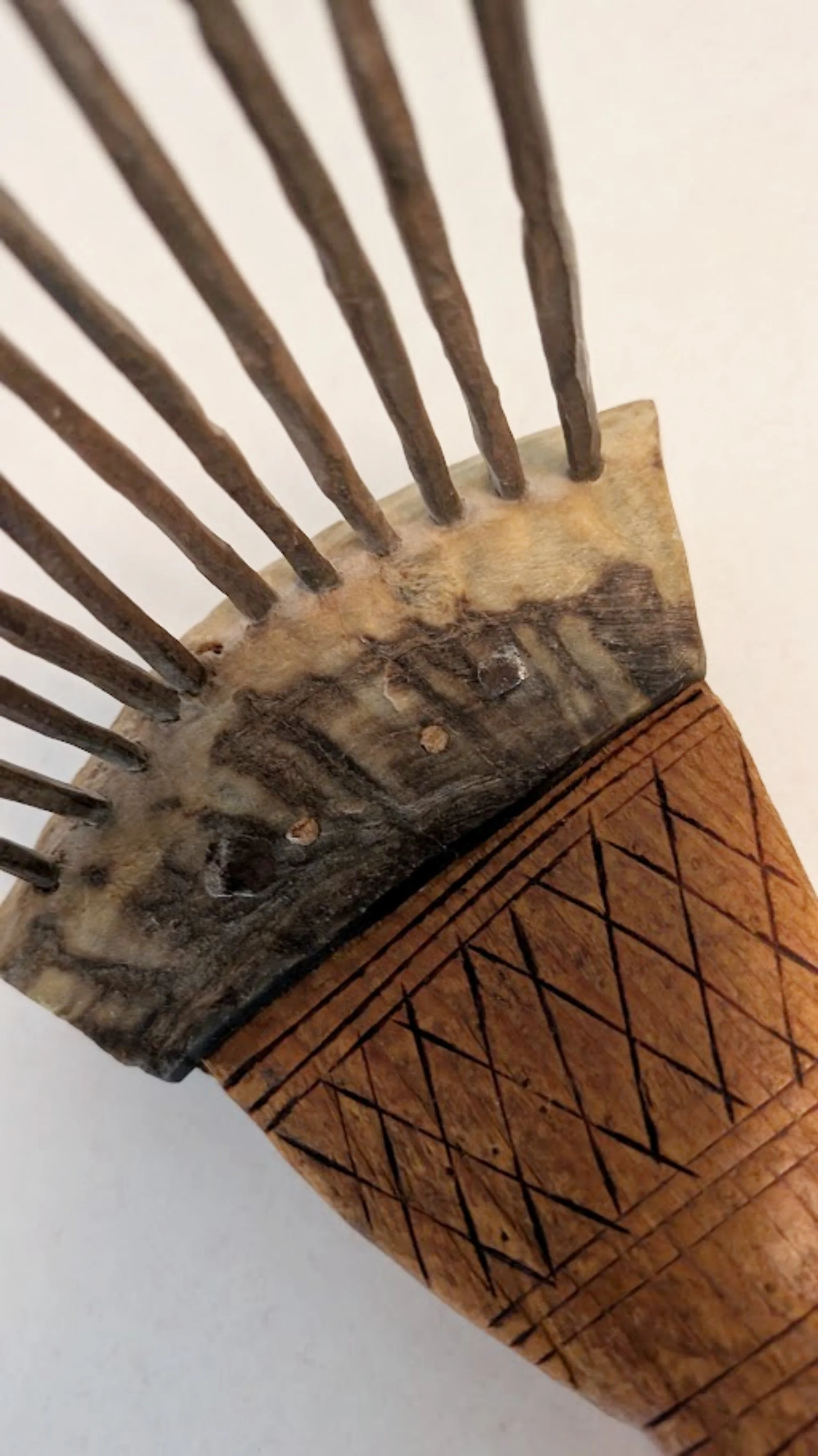 Image 14 of 17
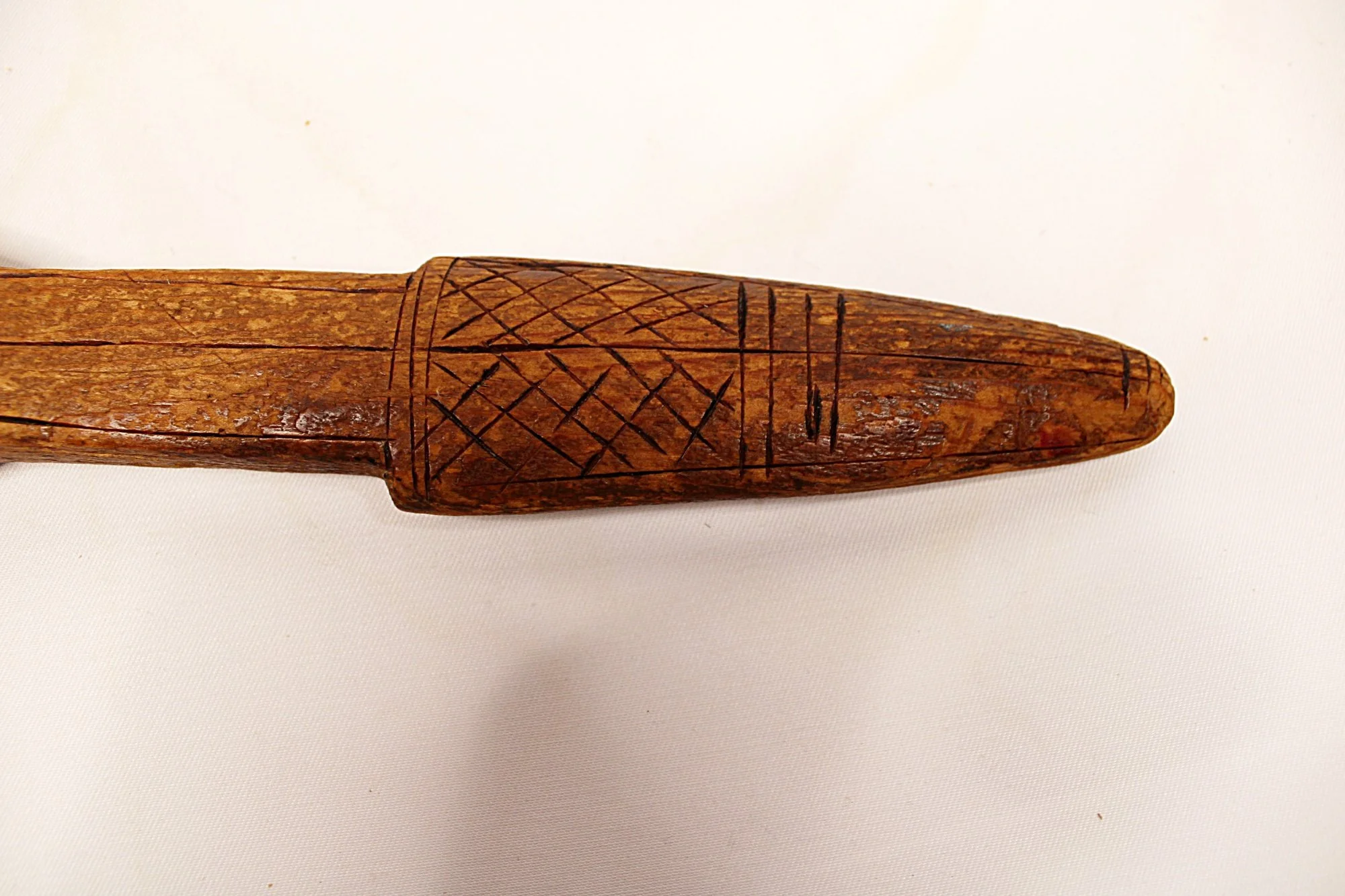 Image 15 of 17
 Image 16 of 17
 Image 17 of 17